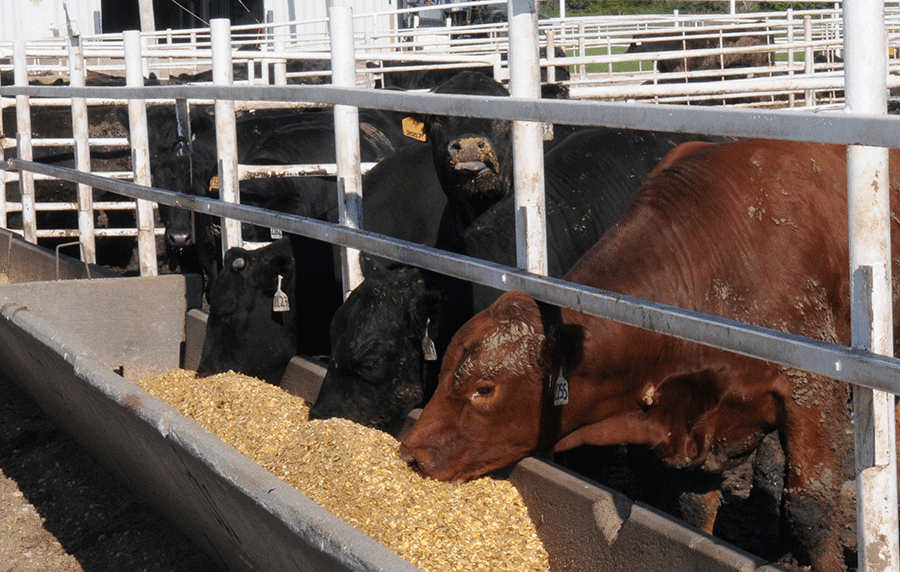
Feed Conversion Ratio (FCR) is one of the most important measurements in livestock production because it shows how efficiently animals convert feed into body weight. Producers use Feed Conversion Ratio (FCR) to evaluate performance, control feed costs, and improve profitability.
Whether raising cattle, pigs, poultry, sheep, or goats, understanding Feed Conversion Ratio (FCR) can help improve management decisions and reduce production costs.
What Is Feed Conversion Ratio (FCR)?
Feed Conversion Ratio (FCR) measures the amount of feed required to produce one unit of weight gain.
In simple terms, it answers the question:
“How many pounds of feed does it take to produce one pound of animal gain?”
Lower Feed Conversion Ratio (FCR) values generally indicate better feed efficiency because less feed is required to achieve growth.

Feed Conversion Ratio (FCR) Formula
The Feed Conversion Ratio (FCR) formula is:
Feed Conversion Ratio (FCR) = Total Feed Intake ÷ Total Weight Gain
For example:
- Total Feed Intake = 6,000 pounds
- Total Weight Gain = 1,500 pounds
FCR = 6,000 ÷ 1,500
FCR = 4.0
This means four pounds of feed were required to produce one pound of gain.
Why Feed Conversion Ratio (FCR) Matters
Feed costs are often the largest expense in livestock production.
Improving Feed Conversion Ratio (FCR) can:
- Reduce feed costs
- Improve profit margins
- Lower break-even prices
- Increase return on investment
- Improve overall production efficiency
Even small improvements in feed efficiency can have a significant impact on profitability across an entire operation.
Factors That Affect Feed Conversion Ratio (FCR)
Several factors influence Feed Conversion Ratio (FCR), including:
- Feed quality
- Animal genetics
- Health status
- Environmental conditions
- Feeding management
- Water availability
- Stress levels
- Average daily gain
Producers who monitor these factors often achieve better feed efficiency and lower production costs.
Example of Feed Efficiency Savings
Suppose two groups of cattle gain the same amount of weight.
Group A:
- FCR = 6.0
Group B:
- FCR = 5.5
If both groups gain 10,000 pounds of total weight:
Group A requires:
10,000 × 6.0 = 60,000 pounds of feed
Group B requires:
10,000 × 5.5 = 55,000 pounds of feed
Group B uses 5,000 fewer pounds of feed.
At $0.15 per pound of feed, that saves:
5,000 × $0.15 = $750
This example shows how small improvements in Feed Conversion Ratio (FCR) can create meaningful cost savings.
How to Improve Feed Conversion Ratio (FCR)
Producers can improve Feed Conversion Ratio (FCR) by:
- Providing high-quality feed
- Reducing feed waste
- Maintaining herd health
- Improving feeding management
- Ensuring adequate water access
- Selecting efficient genetics
- Reducing stress during handling and transport
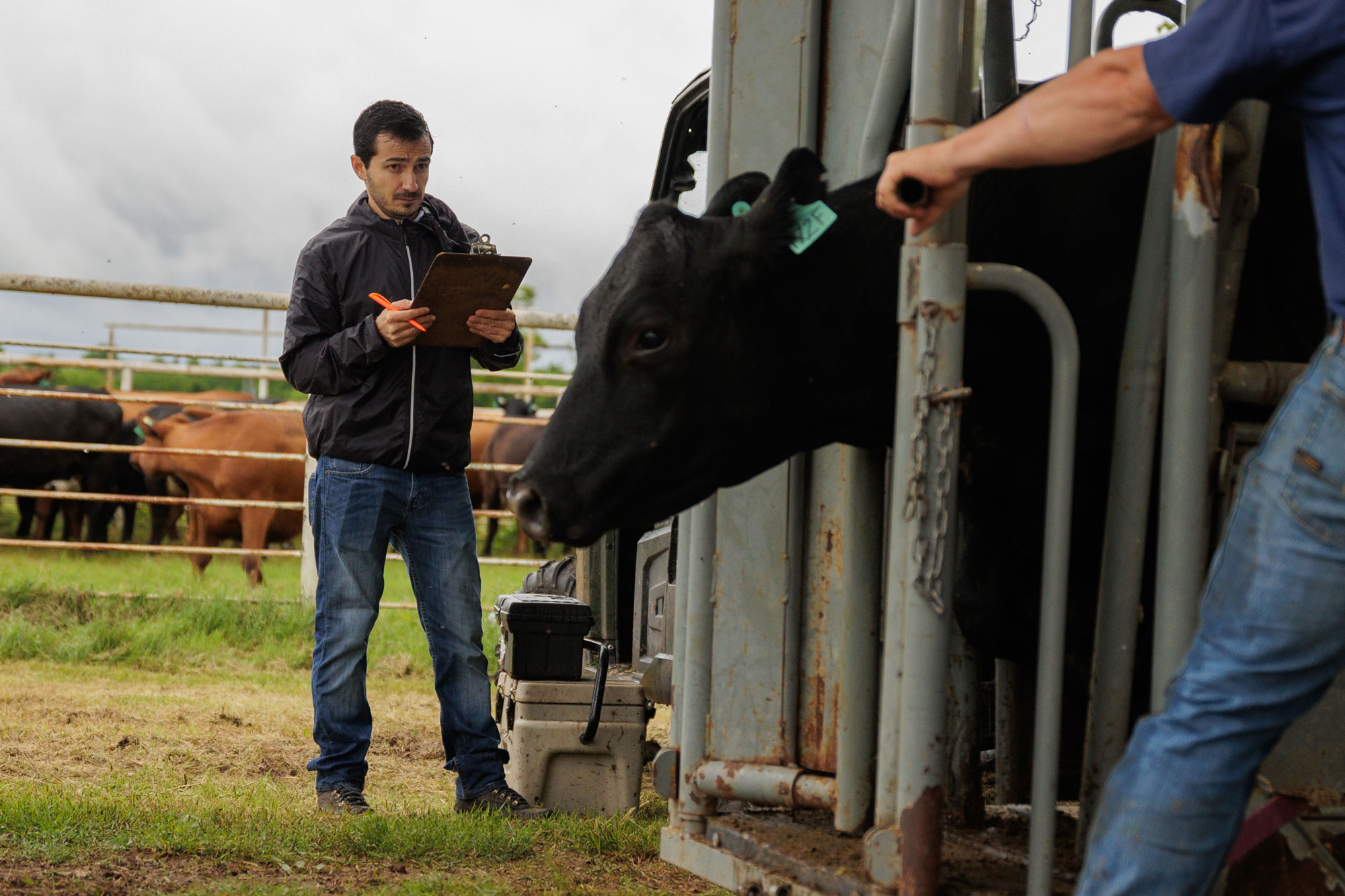
Consistently monitoring performance helps identify opportunities for improvement.
Tools That Can Help
Several Farm Calculator Hub tools can help producers monitor feed efficiency and profitability:
- Feed Conversion Ratio Calculator
- Feed Cost Per Pound Gain Calculator
- Livestock Feed Cost Calculator
- Livestock Profit Calculator
- Break-Even Feed Price Calculator
Using these calculators together can help producers understand how feed efficiency affects overall profitability.
Final Thoughts
Feed Conversion Ratio (FCR) remains one of the most valuable performance measurements in livestock production. Understanding the formula, tracking efficiency, and making improvements over time can significantly reduce costs and improve profitability.
Producers who regularly monitor Feed Conversion Ratio (FCR) are often better positioned to manage feed expenses, improve animal performance, and increase long-term returns.